
National Disruptors:
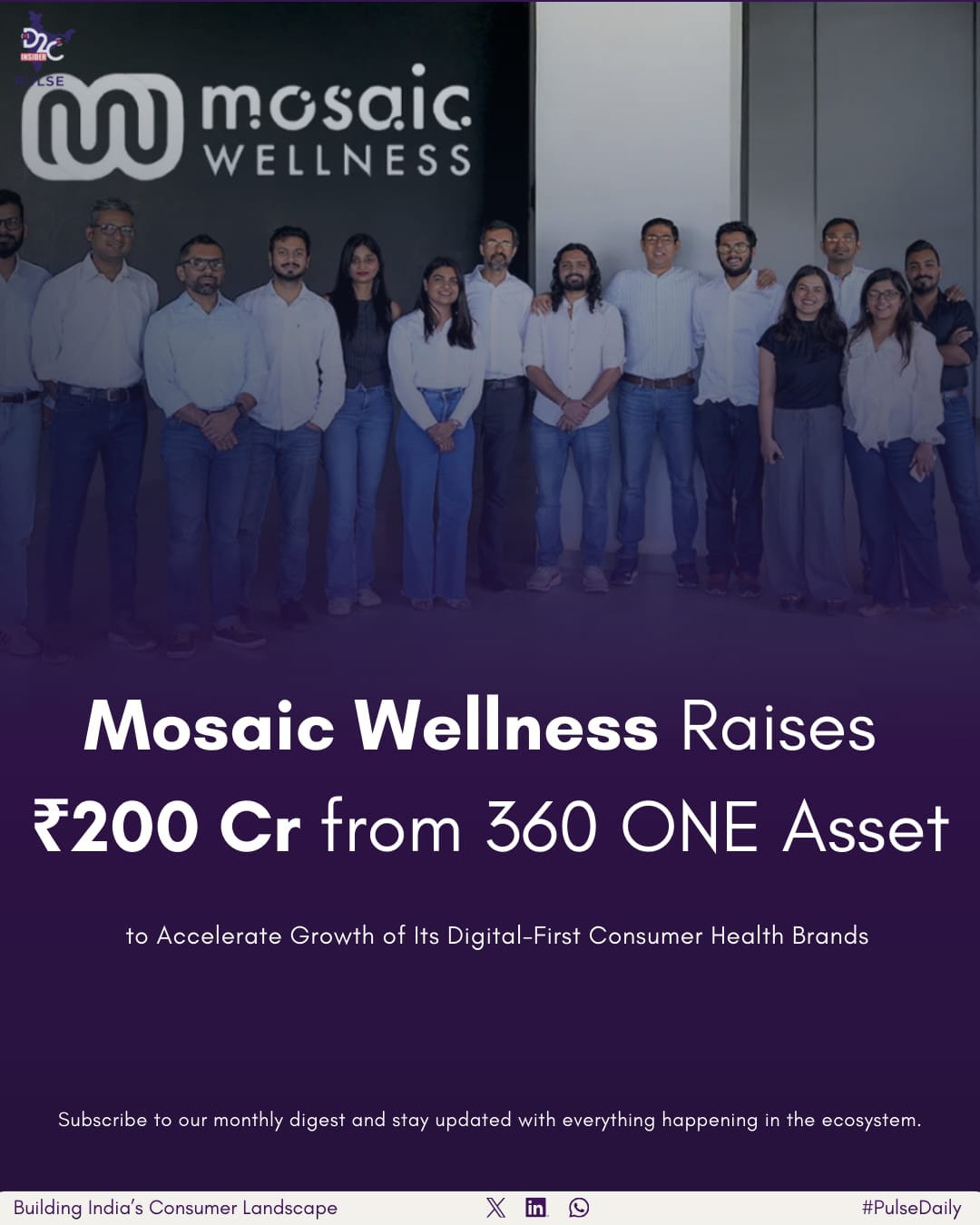
Mosaic Wellness Raises ₹200 Crore from 360 ONE Asset to Accelerate Growth of Its Digital-First Consumer Health Brands
Mosaic Wellness, a consumer health platform, just got a fresh ₹200 crore (about $21 million) investment from 360 ONE Asset. This is a big step for the company, and it also lets Spring Marketing Capital, an early investor, sell some of its stake.
This deal is happening as more and more digital health and wellness brands in India are growing fast. They’re doing it with strong customer demand, tech-based health solutions, and different ways of getting their products to people. Mosaic Wellness will use the money to invest in new chances in the health and wellness area. They want to stay one of the fastest-growing brands in the Indian digital healthcare world.
Since starting in 2020, Mosaic Wellness has built up a group of digital brands like Man Matters and Be Bodywise. Together, these brands help over six million people each year with things like hair health, personal care, fitness, and kids’ health.
Mia by Tanishq Opens Its 275th Store in Bengaluru, Accelerating Growth of India’s Premium D2C Jewellery Ecosystem
Mia by Tanishq, Titan Company’s modern jewelry brand, just opened its 275th store in Kammanahalli, Bengaluru. This is another step in the brand’s fast growth in India’s direct-to-consumer jewelry scene. This opening shows how premium direct-to-consumer brands in India are creating great store experiences and better engaging with their customers.
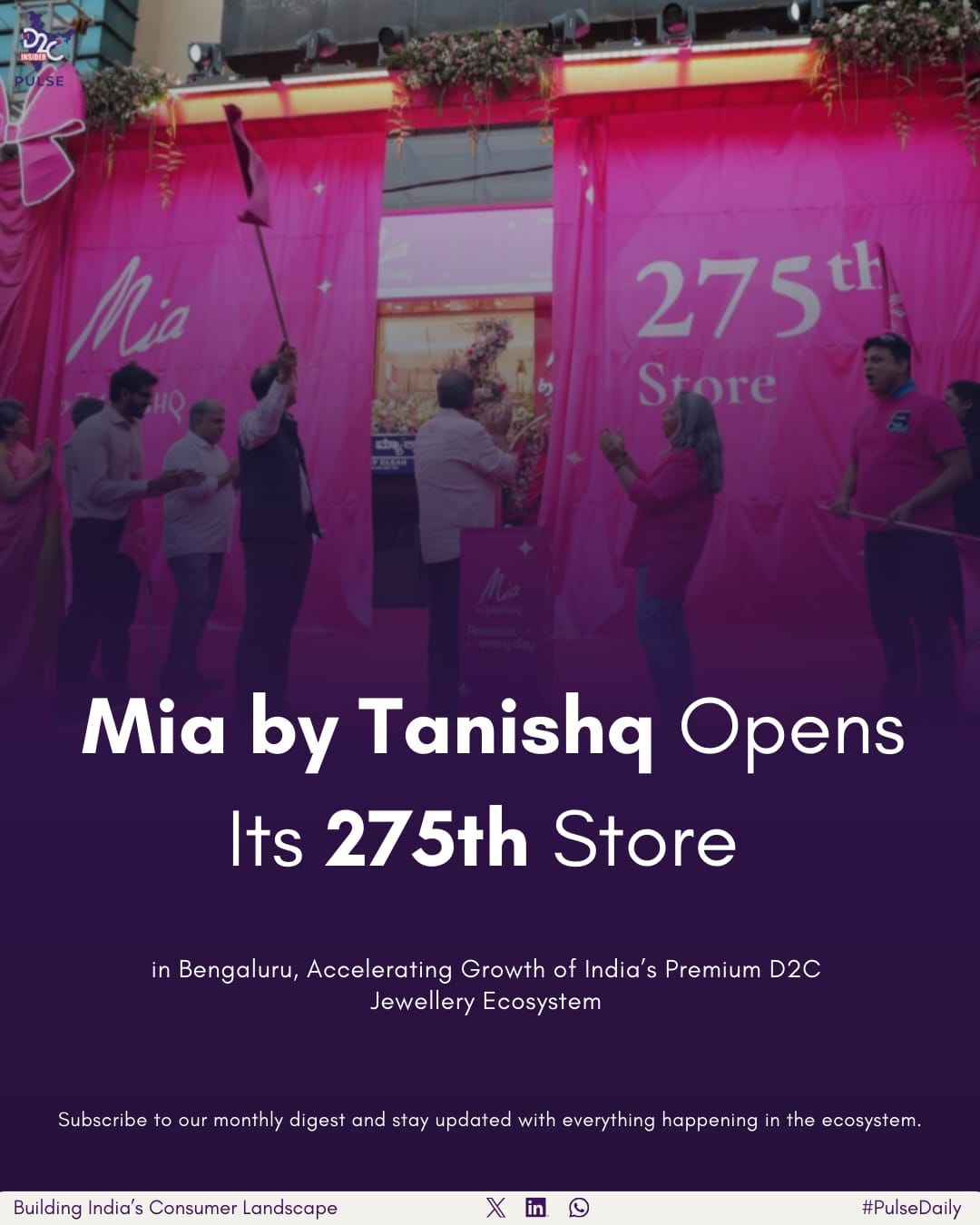
The store, which is about 1,200 square feet, offers a fresh shopping experience made for today’s fashion-forward shoppers. Shyamala Ramanan, the Business Head of Mia by Tanishq, and Ajay Dwivedi, Regional Business Head – South at Titan Company, opened the store. This opening shows Mia’s increasing presence in Bengaluru, a city that has really helped shape the brand and its customer base.
Opening the 275th store is a big deal for Mia, as it is one of the fastest-growing jewelry brands in India’s expanding direct-to-consumer world. To celebrate, the company gave away 275 gifts to customers who visited the store.
DrinkPrime Secures ₹20 Crore Funding at 30% Valuation Premium as India’s D2C Appliance Subscription Market Expands
In the latest D2C news India and D2C startup news from the country’s rapidly evolving consumer technology landscape, DrinkPrime has raised ₹20 crore in fresh funding from Artha Venture Fund and Mirabilis Investment Trust. The round highlights continued investor confidence in technology-enabled Direct-to-consumer India platforms that combine hardware, software, and subscription-based services.
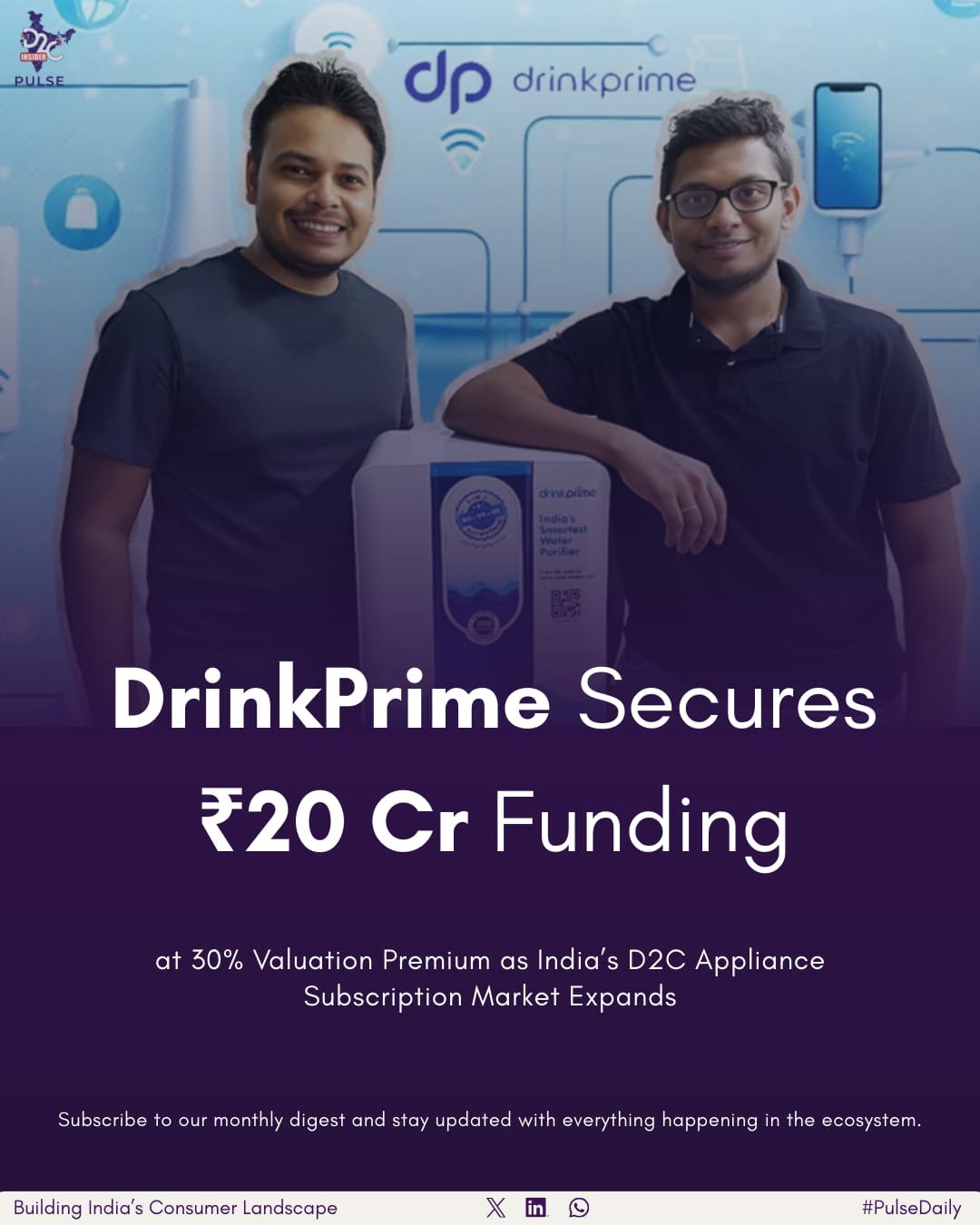
According to regulatory filings with the Registrar of Companies (RoC), DrinkPrime’s board approved the allotment of 21,718 Series A3 CCPS and 10 equity shares at an issue price of ₹9,205 per share, raising a total of ₹20 crore. Both Artha Venture Fund and Mirabilis Investment Trust contributed ₹10 crore each in the round. The proceeds will be used in line with the company’s approved business plan as it continues scaling within India’s expanding D2C ecosystem India.
Industry estimates indicate that the fresh funding has pushed DrinkPrime’s valuation to approximately ₹340 crore (around $37 million), representing a 30% valuation premium compared to its previous valuation of ₹261 crore.
Business Boost :
Zoff Foods Raises $2 Million to Accelerate Omnichannel Expansion in India’s Fast-Growing D2C Spices Market
Zoff Foods just got $2 million (₹18.5 crore) in a pre-Series B funding led by JM Financial through its India Growth Fund III. Aman Gupta also joined in, showing investors are really believing in the growing Direct-to-consumer food and FMCG scene in India.
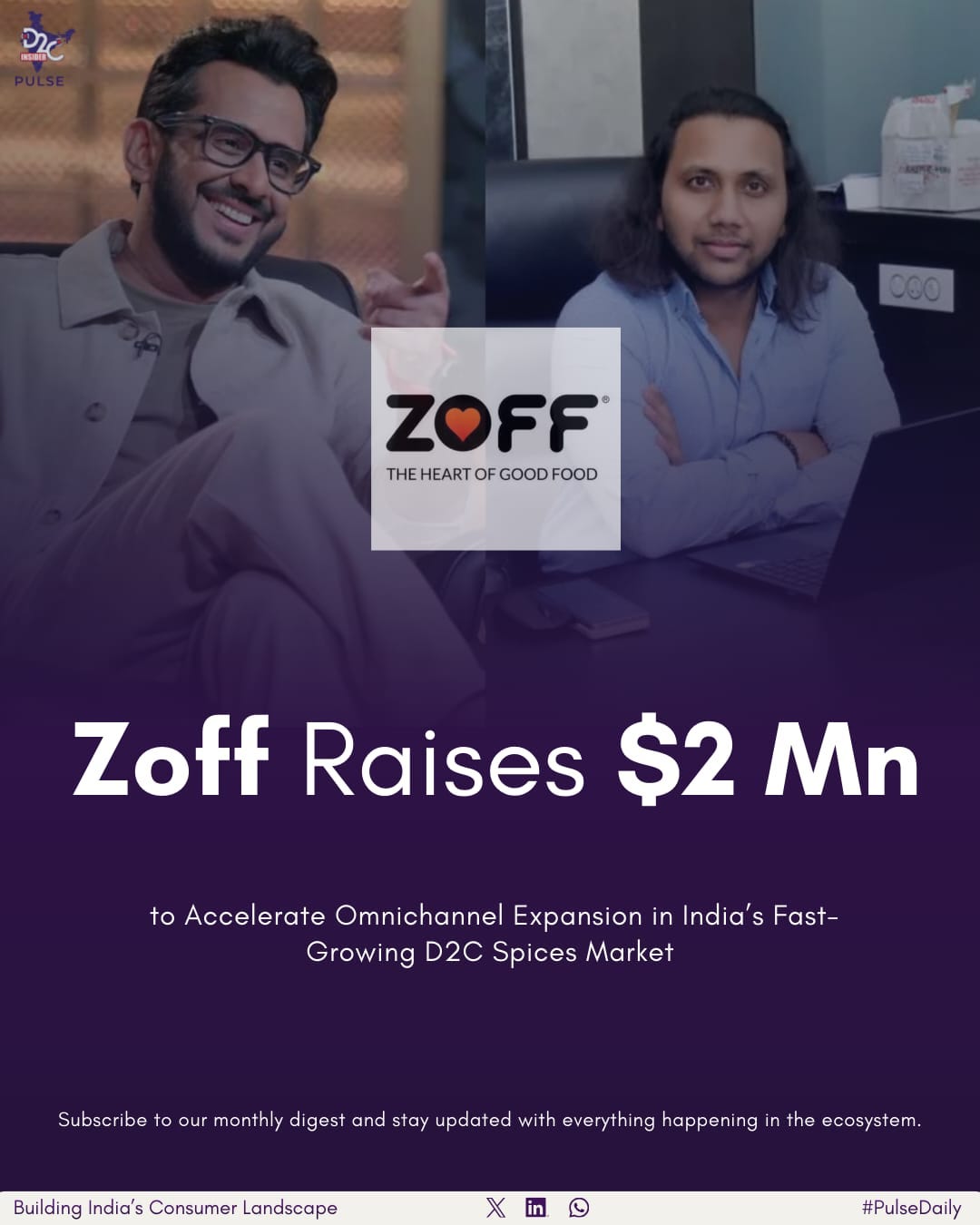
This funding is a big step for Zoff, showing how well D2C food and beverage brands are doing in India. Zoff Foods plans to use the money to get into more stores, both big chains and local shops, grow on fast delivery D2C platforms, and put more into its brand through marketing and sales.
Akash Agrawalla and Ashish Agrawal started Zoff Foods in 2018. They’re creating a modern spice brand that focuses on fresh, quality cooking stuff using tech in their production and delivery.
Boba Bhai Raises $4.3 Million to Accelerate Expansion as India’s D2C Food and Beverage Ecosystem Grows
Boba Bhai, an India-based D2C startup, just got $4.3 million (about ₹40 crore) in a new funding round. Existing investors such as 8i Ventures, Titan Capital (through its Winners Fund), and Global Growth Capital put money in. Big Capital and some angel investors also joined in. This shows they really believe in Boba Bhai, which is one of the fastest-growing food and drink D2C brands in India.
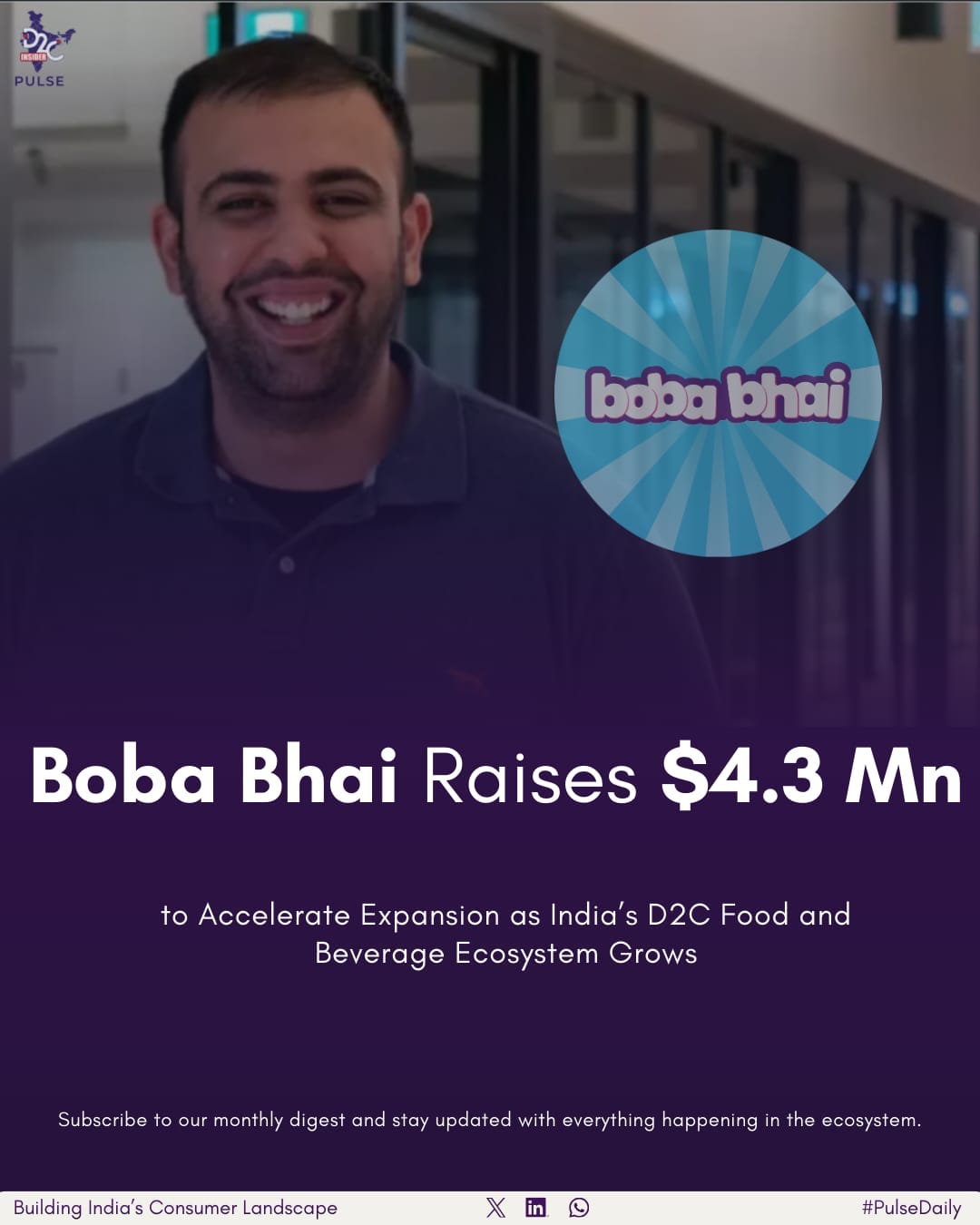
This new money is a big step for the company and shows that people are getting more interested in D2C brands that have a strong identity and sell in many ways. The company plans to use the money to open more stores, get better leaders, and create new products as it grows across the Indian food scene.
Dhruv Kohli started Boba Bhai in 2023, and it quickly became a well-known name in the new group of Indian food and drink D2C startups.
Healthtech Startup Cent, Raises $5 Million to Build India’s Next-Gen Direct-to-Consumer Healthcare Platform
Practo’s co-founder and CEO, Shashank ND, just launched a new preventive healthcare company called Cent. He’s already secured around $5 million in seed funding (about ₹45.8 crore). This move is a big deal for direct-to-consumer healthcare in India, where tech, data, and prevention are becoming more and more important.
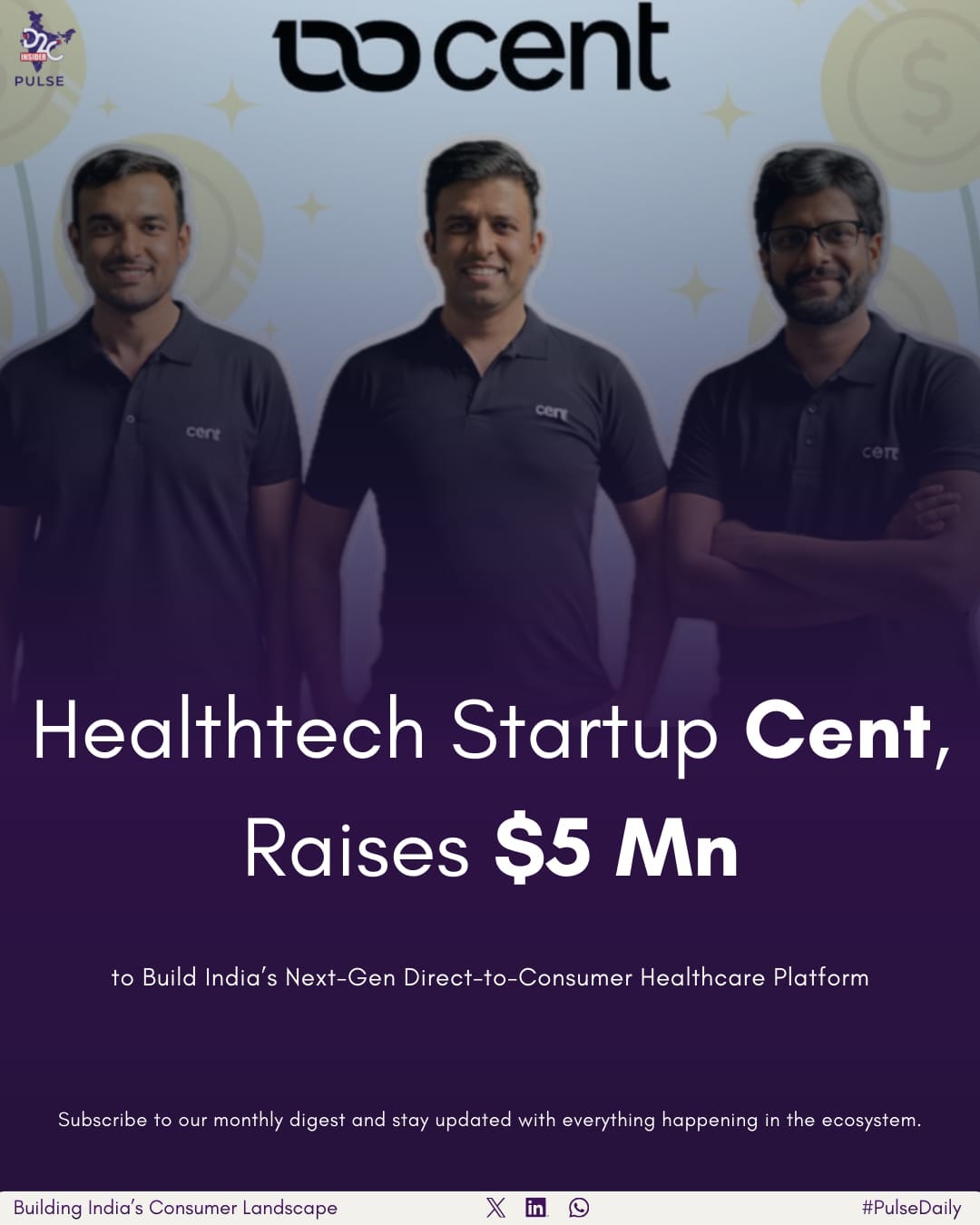
Cent is a platform that wants to spot life-threatening diseases before you even feel sick. It uses fancy imaging, AI, and different diagnostic tests to find health risks early on. This fits into the larger trend of direct-to-consumer healthcare in India, which is moving toward more proactive and custom solutions.
Shashank ND started Cent with Anshul Khandelwal, who used to be the CMO at Ola, and Arpit Garg, who has tons of experience in sales.
Founders Funded:
Basil Health Raises $1.5 Million Pre-Series A to Expand IoT-Powered Fresh Beverage Network in India
Basil Health, a new beverage brand, just got $1.5 million in funding to grow across India’s quickly growing beverage market. Whiteboard Capital led the round, with participation from Brigade REAP, Barbershop Fund, and some angel investors like Deep Bajaj and Siddharth Kothari.
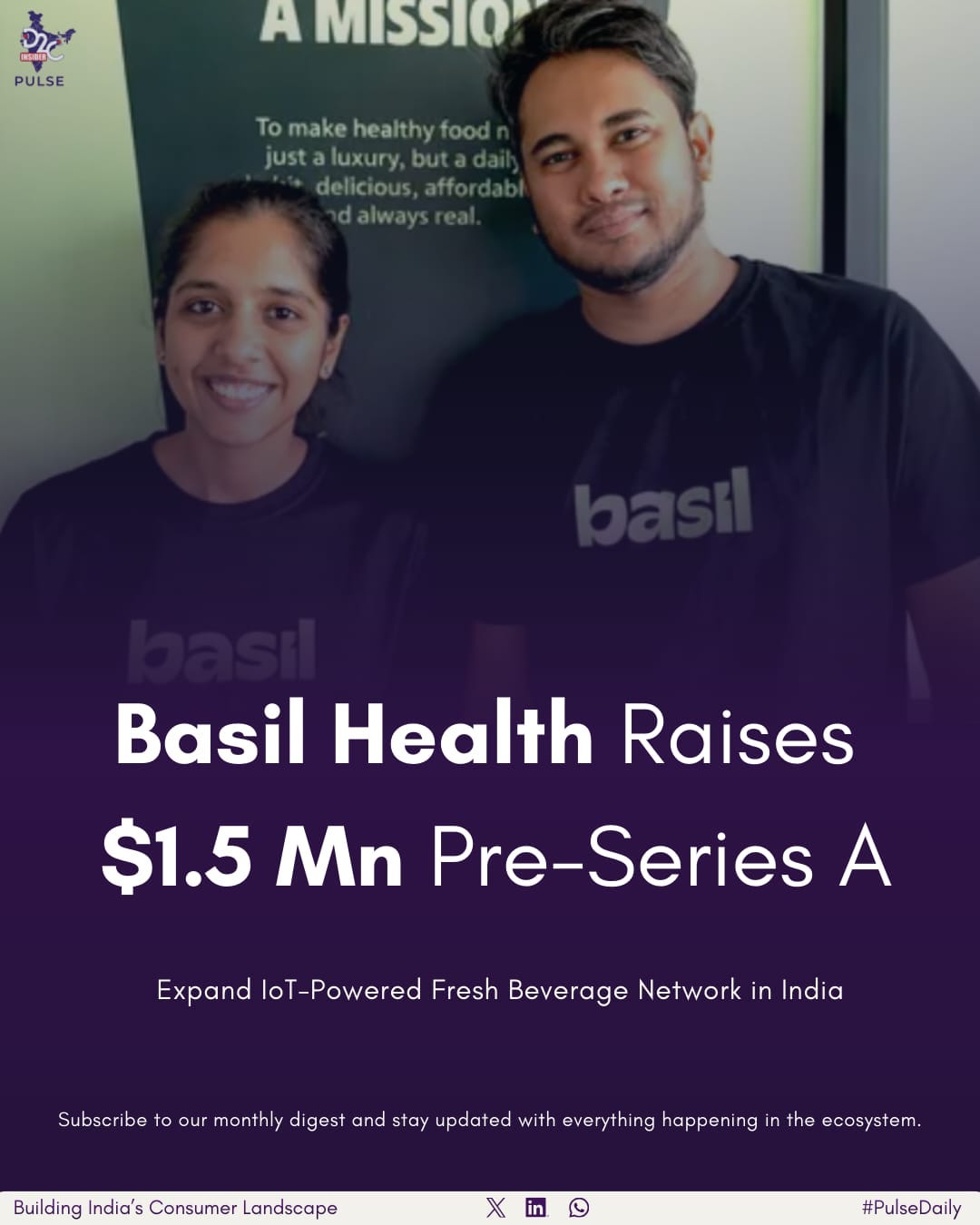
This funding is a big deal for the Delhi startup. They want to expand their drink retail approach, which mixes small kiosks with automated machines. They’ll use the money to move into new cities, improve their supply setup, build their brand, and grow their team. Basil Health intends to be a major player in India’s D2C food and beverage scene.
Started in 2023 by Harshita Kejriwal, Akshay Chaudhari, and Karan Dwivedi, Basil Health is creating a modern drink retail setup that uses tech to serve fresh, cafe-quality drinks.
AI-Powered Commerce Startup Ctruh Secures Shark Tank Deal to Transform Digital Commerce for D2C Brands
Ctruh, a startup from Bengaluru, just got a strategic investment after being on Shark Tank India Season 5. Vinay Agastya founded the company, which is creating what they call the world’s first AI-powered Unified XR Commerce Studio. It’s designed to help brands make cool, interactive online shopping experiences.
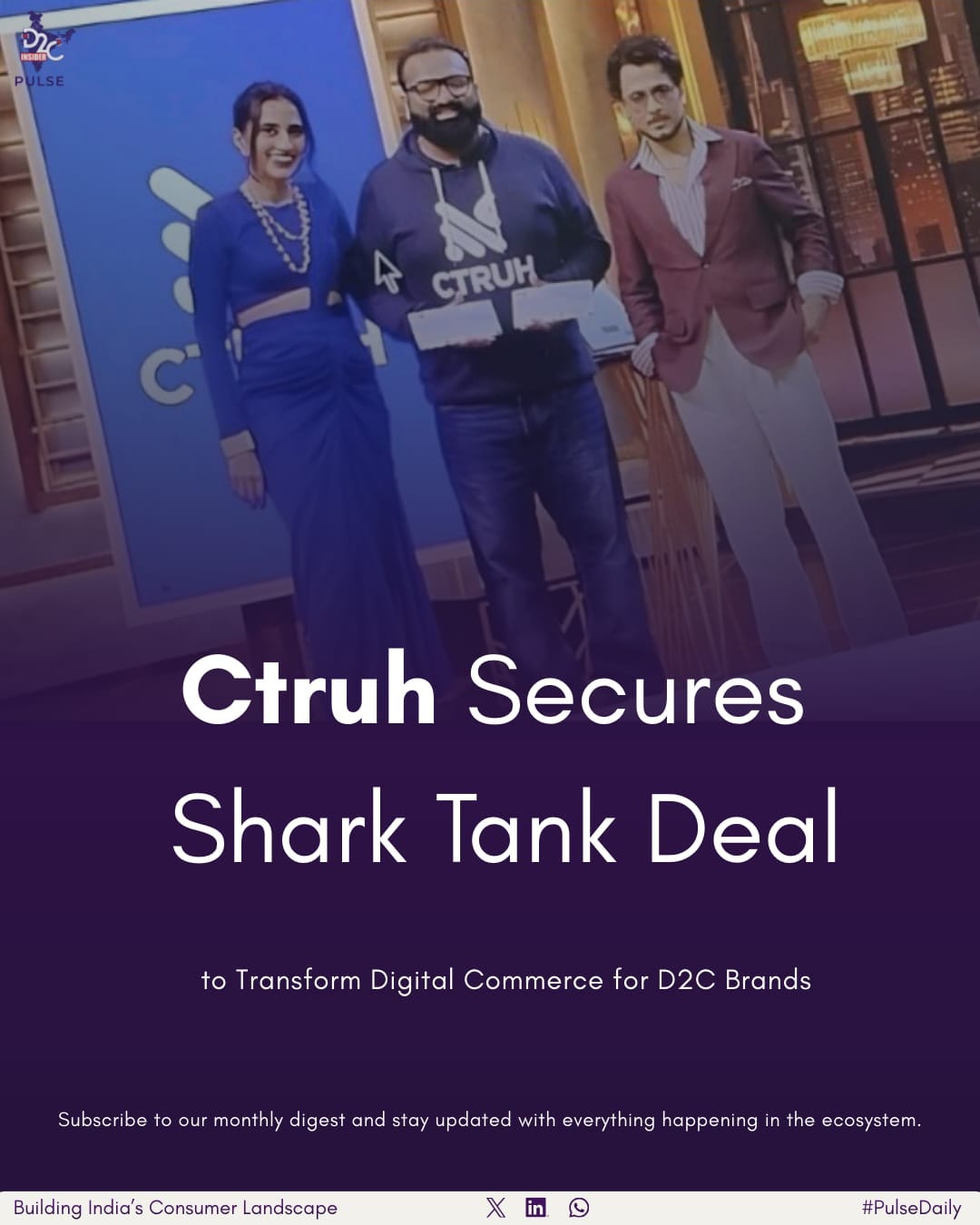
During his pitch, Vinay Agastya wanted ₹1 crore for 1.2% of his company, which he valued at over ₹83 crore. After talking with the Sharks, Anupam Mittal and Vineeta Singh made a counter-offer: ₹1 crore for 2.4% equity. Agastya took it, getting money and advice from two big investors from the show.
Ctruh, started in January 2023, wants to change how people find and check out products online. Because India’s direct-to-consumer scene is changing so fast, brands need new ways to connect with customers online.
Pink Adrak Secures Strategic Backing from String Ventures’ Shivam Mishra, Targets ₹55 Crore Revenue by 2028
Pink Adrak, a new QSR platform from India, just got some backing from Shivam Mishra. This is a big deal for D2C news in India and the country’s growing direct-to-consumer food scene. The investment shows that people are believing more and more in tech-based, food brands that can grow, make money, and involve customers.
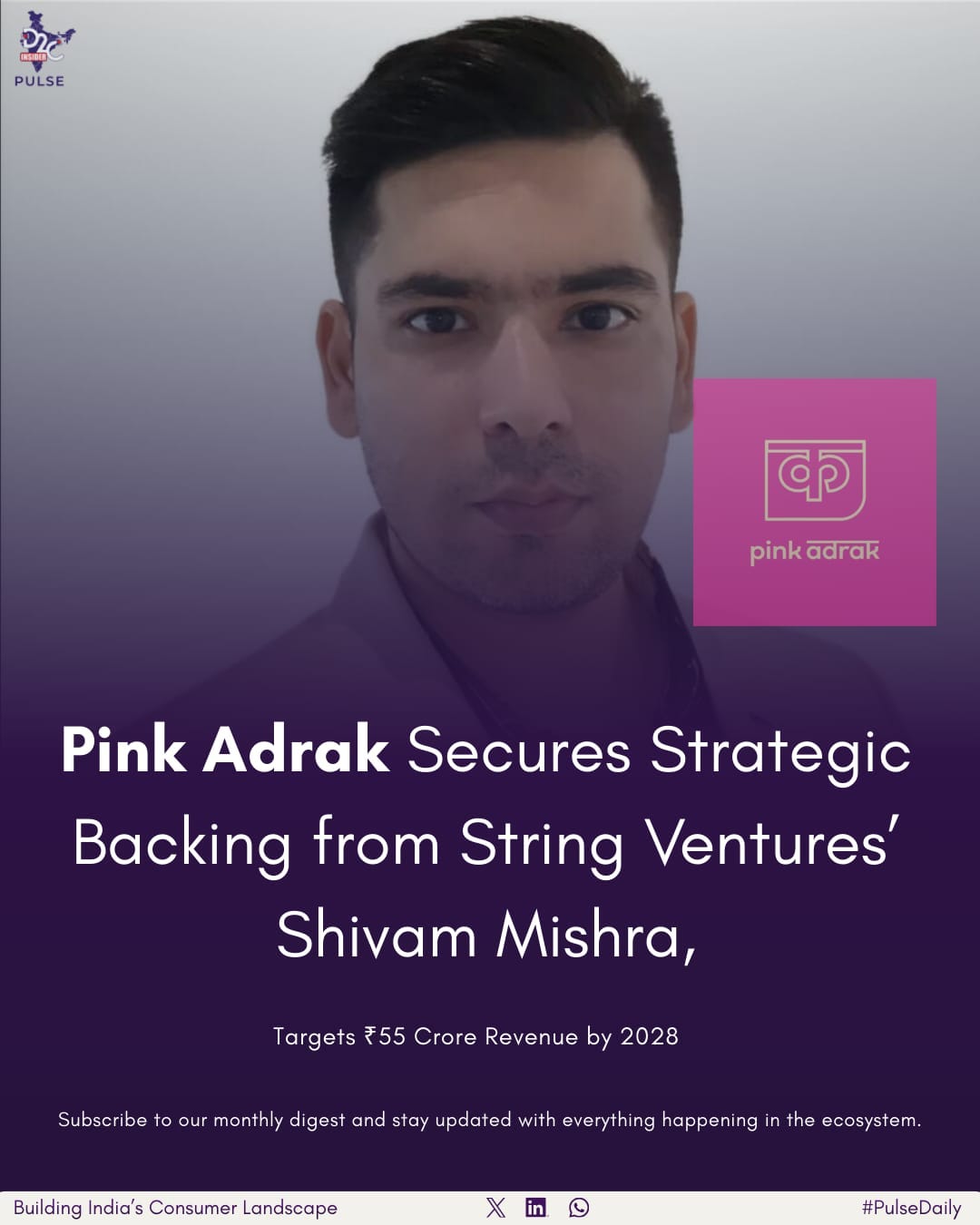
The funding includes ₹12.25 crore in a mix of stock and sales help. This will let the company grow in North India while making its QSR platform and tech better. Pink Adrak is now among the newest D2C companies creating platform-led food brands made for how India is changing what they eat.
Ankur Gakkhar started Pink Adrak because he wanted to create a food services company based on a platform. Right now, the brand has 12 locations in Gurugram and Jaipur. They’ve served over 1.5 lakh customers and filled over 5 lakh orders, with a good 4.6 rating on food delivery platforms.
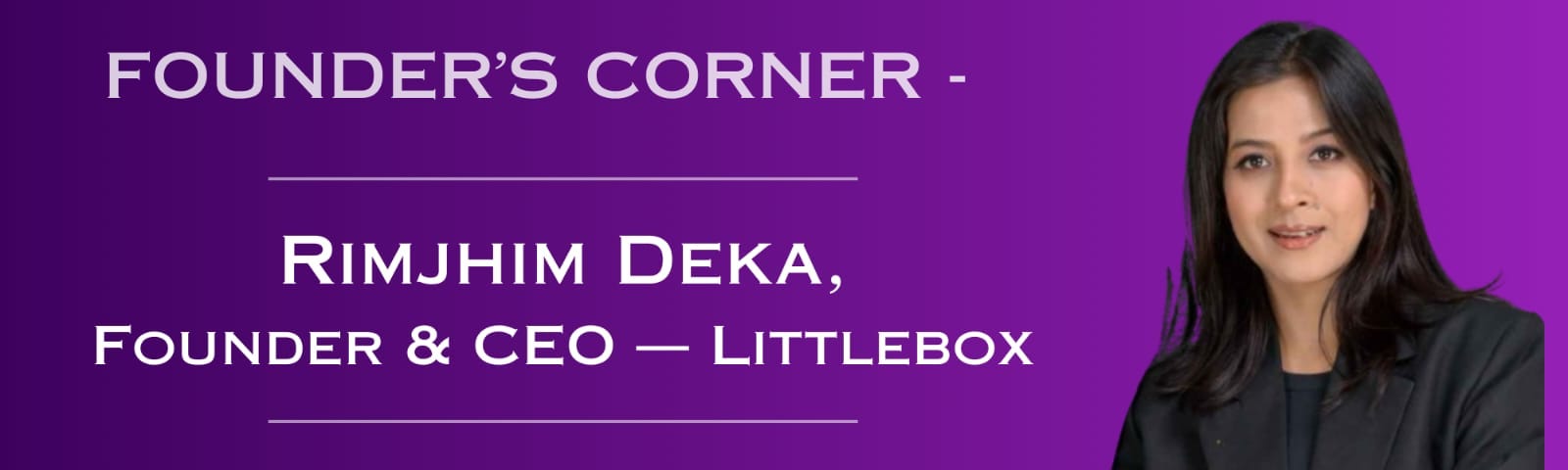
“Capital should amplify momentum — not replace clarity.”
When Littlebox started, many fashion startups launching at the same time had far more funding.
Most of them don’t exist today.
For the first three years, Rimjhim Deka built Littlebox without raising external capital. The brand crossed 1 million orders, built a 40,000 sq ft factory in Noida, and reached over 22 lakh customers — entirely customer-funded.
It wasn’t an ideological choice.
It was clarity.
After 14 years in the fashion industry, Rimjhim had seen what happens when brands raise money before understanding their business. Teams start optimizing for growth graphs instead of repeat customers, expand categories before mastering one, and build inventory before proving real demand.
In fashion, that distortion can be fatal.
Instead, Littlebox focused on what actually matters — supply chain discipline, inventory velocity, and real customer demand.
Their systems weren’t built in boardrooms.
They were built through real experimentation — and real losses.
A 25-day inventory cycle, a 7-day trend-to-website pipeline, and a strong CLV-to-CAC ratio came not from strategy decks but from figuring things out with their own money.
Only after the model proved itself did the company raise ₹17.5 crore from Huddle Ventures and Prath Ventures.
Not to discover the business.
But to scale what was already working.
For Rimjhim, funding is simple:
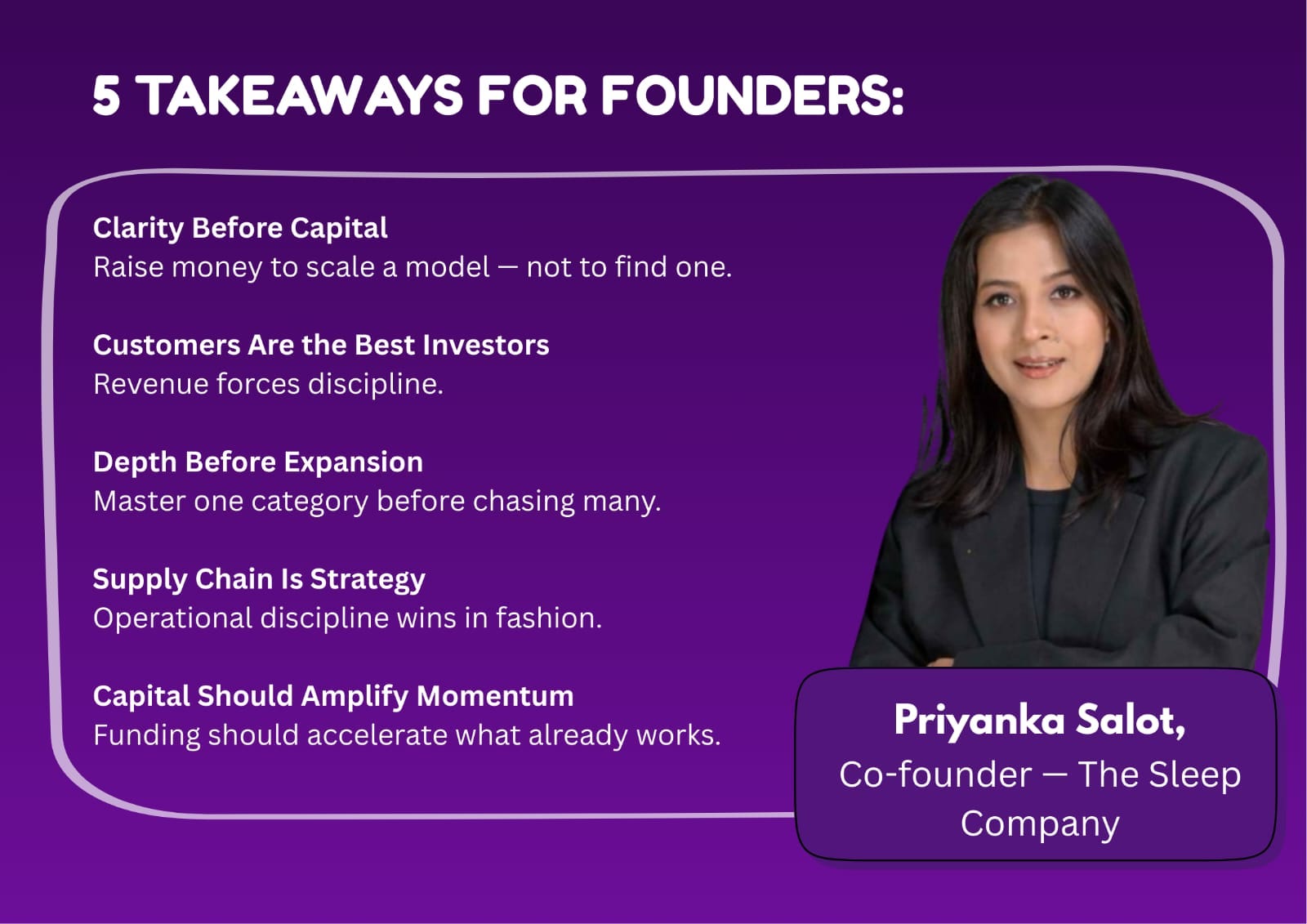
Capital should accelerate strength — not hide weakness.
📌 D2C INSIDER UPDATE — ELEVATE COHORT 6 🚀
Most founders don’t lack effort.
They lack the right room.
That’s exactly what Elevate by D2C Insider is built for — a 12-week accelerator where early-stage founders get direct access to operator-led insights, sharp feedback, and a community that pushes them to build what actually scales.
No vanity metrics.
No surface advice.
Just real conversations, real mentorship, and real growth.
Elevate Cohort 6 applications are now open.
🚀 Apply here: d2ci.co/elevate_register